
There has been plenty happening across CrackSense this summer. Four seasons of fieldwork are now covered, new research has been published, and the project continues to explore how data, sensing and digital technologies can help us better understand fruit cracking.
Here is a look at the latest research, field activities, expert conversations and stories from CrackSense.
Digital Tools in the Vineyard
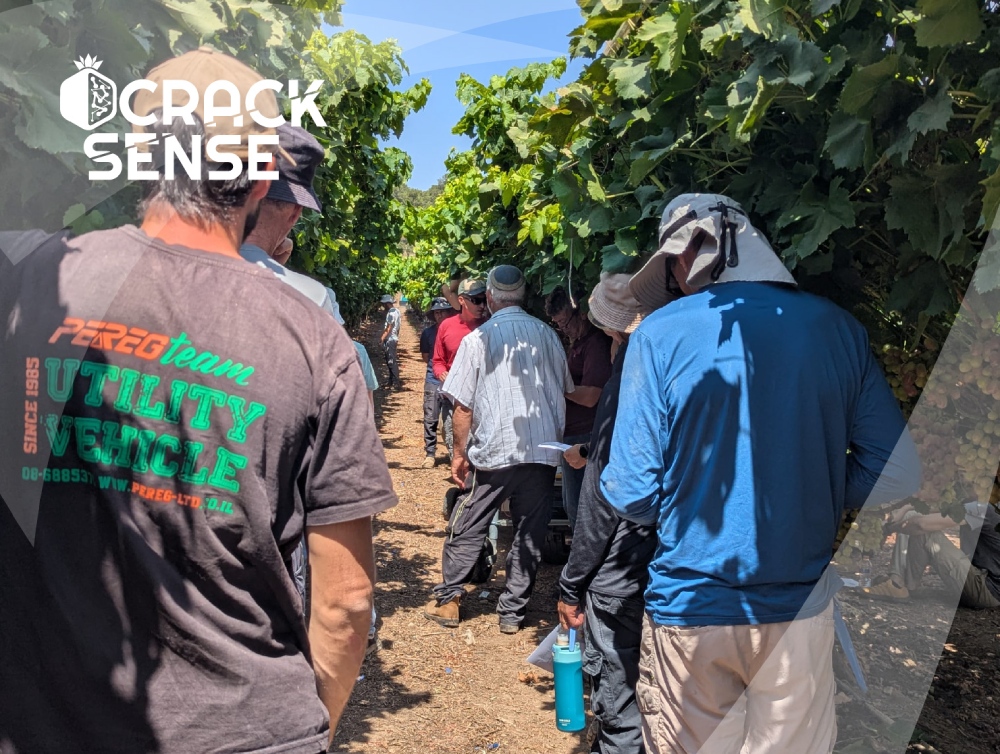
The CrackSense Open Day in Moshav Lachish, Israel, brought researchers, growers and technology specialists together to explore how digital tools can support fruit cracking mitigation in vineyards.
Participants saw field demonstrations involving drones, the TOMMY robotic system and technologies for monitoring vine water status. The event also provided an opportunity to discuss deficit irrigation approaches and how field data can support better understanding of grape cracking.
New Research on Citrus Cracking
A new peer reviewed study from CrackSense examines the relationship between plant water status, yield and fruit cracking in citrus orchards.
The research combines UAV multisensor data with machine learning to investigate how changes in plant water status can be linked to cracking and yield outcomes, supporting the development of more informed monitoring approaches.
Testing Cracking Prediction in Citrus
The latest CrackSense citrus pilot results from France and Israel show how irrigation, climate and orchard conditions can influence fruit cracking.
In Corsica, regulated deficit irrigation generally reduced cracking, while climatic stress emerged as the main factor linked to cracking in the initial machine learning models. In Israel, cracking varied considerably between commercial orchards, reaching 32% to 61% in Nitzan and 9% to 34% in Hadera.
The findings are now being used to validate fruit cracking prediction models across different orchard conditions.
Four Seasons of Fieldwork Completed
Four cultivation seasons of field data collection have now been completed in commercial table grape vineyards in Kiato, Peloponnese, Greece.
The CrackSense team has collected field and crop data across four seasons to better understand fruit cracking and associated yield losses under real commercial conditions. With field measurements now complete, the focus turns to bringing the data together and developing useful knowledge and decision support tools for growers.
Take a look at the fieldwork in action!
CrackSense Data Stories: New Podcast Episodes
Through Data Stories 360°, CrackSense brings you conversations with researchers and experts, sharing their perspectives, expertise and experiences. Here are the latest episodes:
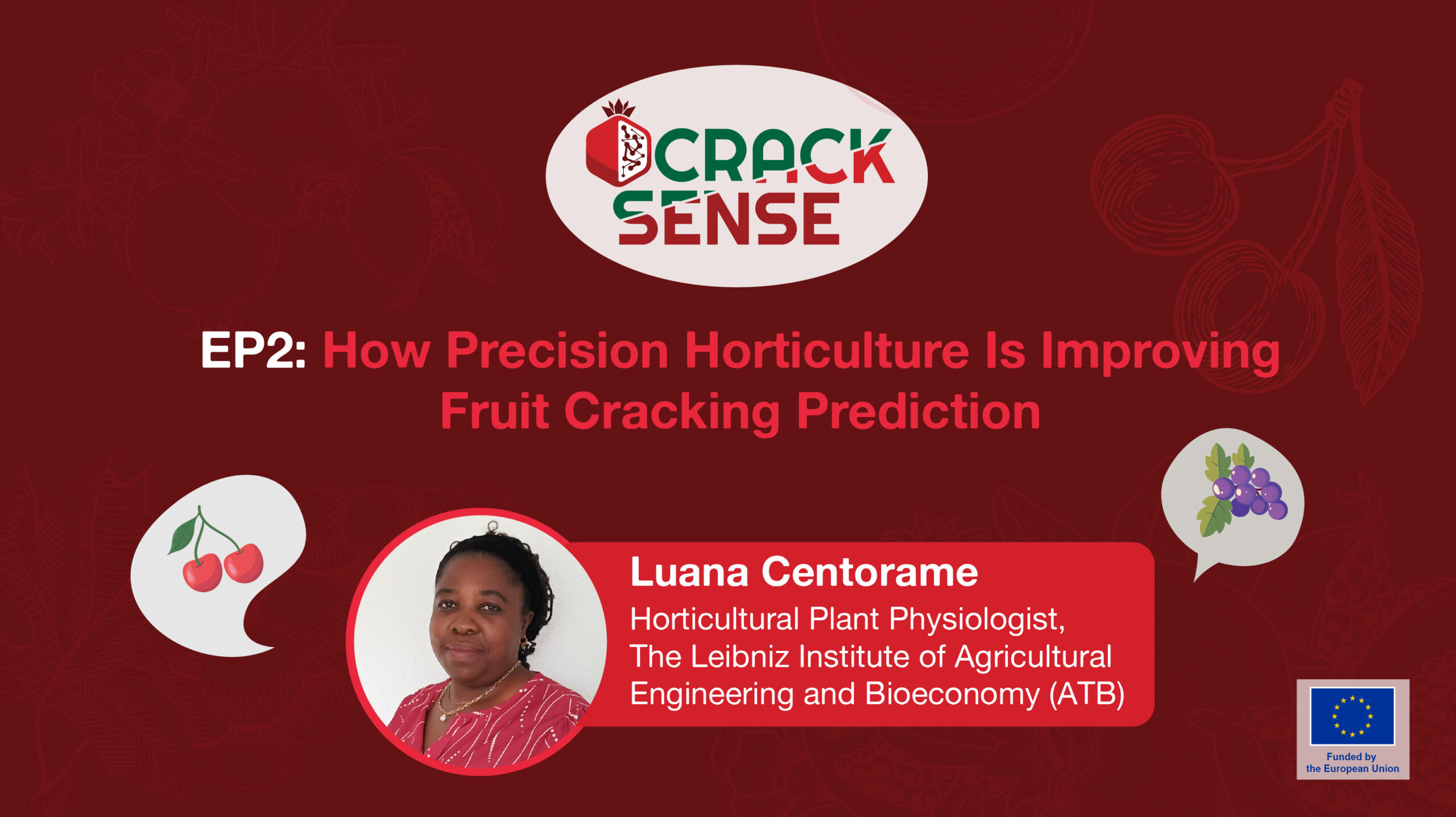
- Episode 2 with Dr Helene Fotouo looks at what happens inside fruit when cracking occurs, the factors involved and what sensors can reveal about crops that traditional methods cannot capture.
- Episode 3 with Nikos Arvanitis explores the use of AI and data driven technologies in agriculture, including pest and disease detection, smart irrigation and data integration, as well as the links between CrackSense and Agridatavalue.
- Episode 4 with Georgia explores field research in CrackSense, including observations from experimental orchards, fruit cracking data collected over several seasons, the role of growers’ input, and how AI and new technologies can support agricultural research and decision making.
New Article on Wikifarmer
A new CrackSense article is now available on Wikifarmer, introducing TOMMY, the robotic system being used to detect early signs of fruit stress.
The article explains how TOMMY combines robotics and sensing technologies to monitor crops and identify changes that may be linked to fruit stress and cracking. It also looks at how robotic monitoring can support more targeted crop assessment in the field.
Getting to Know Grapes
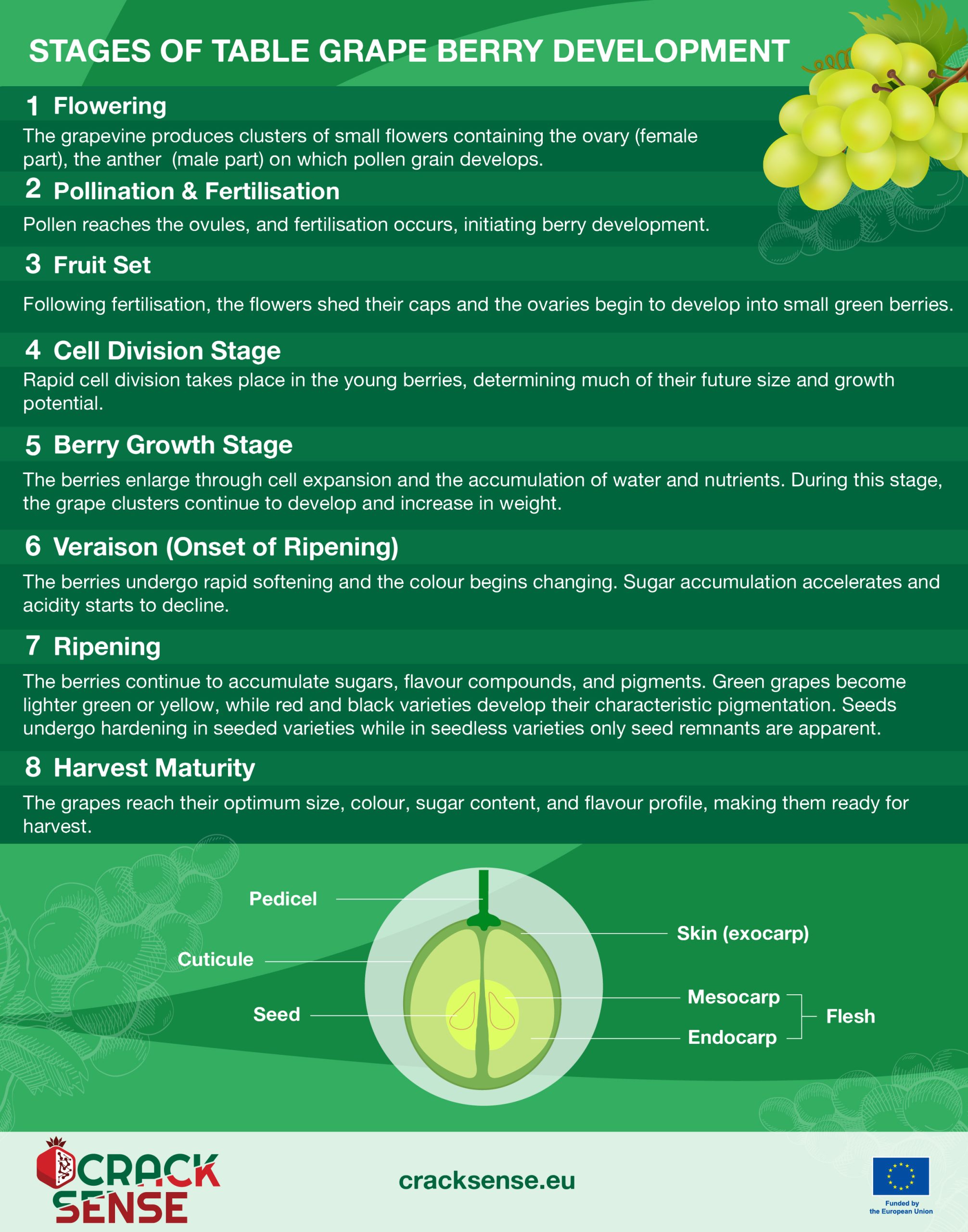
With grapes taking centre stage this time of year, CrackSense has been sharing a series of fun facts and infographics about this popular fruit.
From grape colour and ripening to the factors linked to fruit cracking, the series offers a simple way to learn more about what happens before grapes reach the table.