
Every bunch of table grapes goes through a remarkable journey before reaching our tables. From the first blossoms in spring to ripe, sweet berries at harvest, grape development follows a series of stages that determine fruit size, texture, flavour, and quality.
Understanding how grapes develop and why cracking occurs is an important step towards improving vineyard management and developing effective mitigation strategies.
The Journey of a Developing Berry
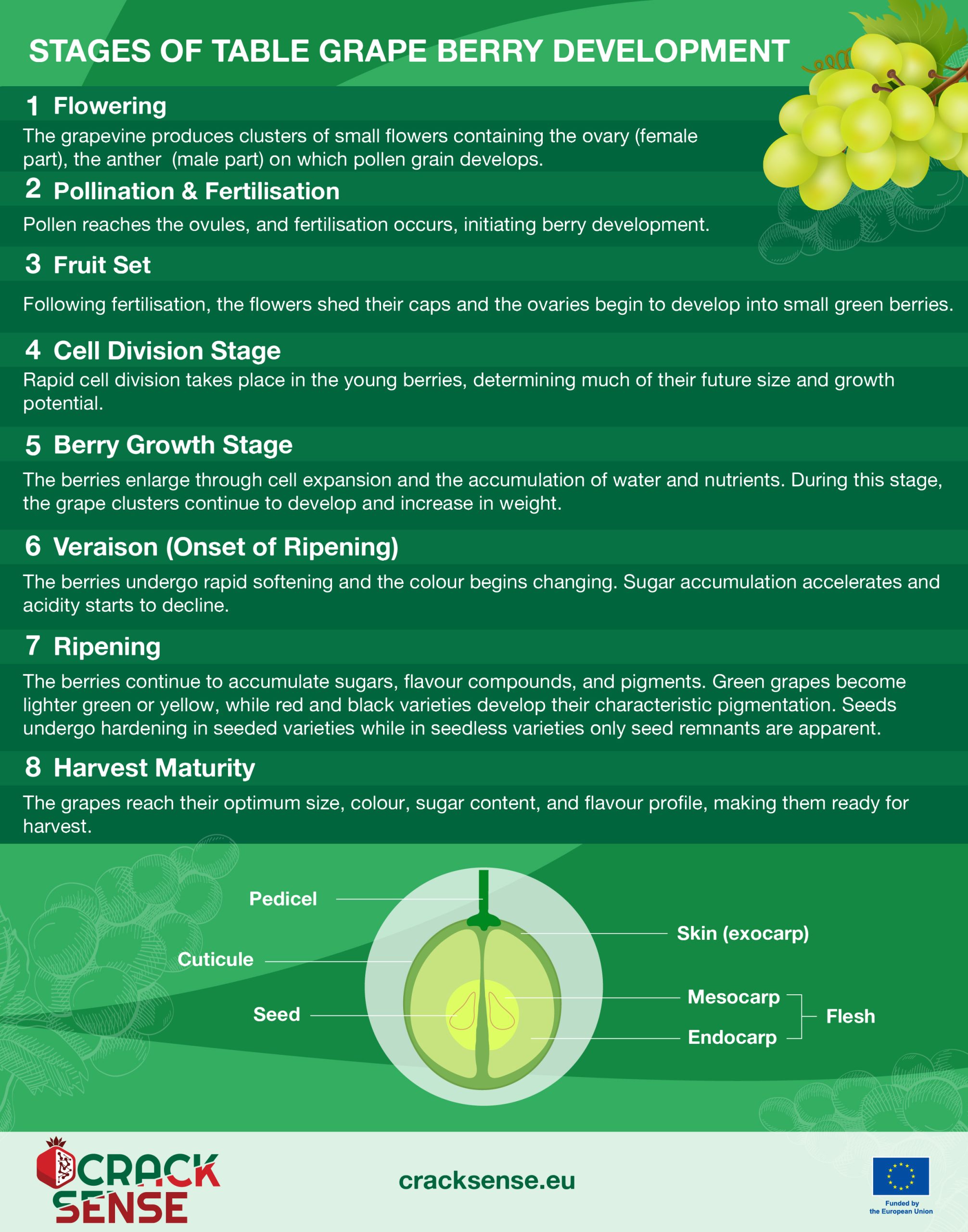
The development of a table grape begins with flowering, when the grapevine produces clusters of small flowers containing the ovary (female part) and the anther (male part), where pollen grains develop. Once pollination and fertilisation occur, the flowers shed their caps and the fertilised ovaries begin developing into small green berries.
During the following weeks, rapid cell division determines much of each berry’s future size and growth potential. As development continues, the berries expand through cell enlargement while accumulating water and nutrients, causing the grape clusters to steadily increase in weight.
A major turning point arrives at veraison, the onset of ripening. At this stage, the berries soften rapidly, sugars begin to accumulate more quickly, acidity declines, and colour development starts. Ripening then continues as flavour compounds and pigments develop. Green varieties become lighter green or yellow, while red and black cultivars acquire their characteristic colours. In seeded varieties, the seeds harden, whereas seedless grapes retain only seed remnants. Eventually, the berries reach harvest maturity, having achieved their optimum size, colour, sugar content, and flavour.
Why Do Table Grapes Crack?
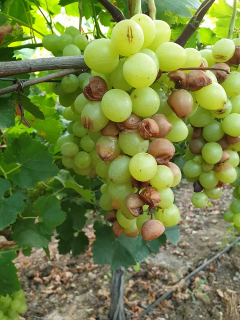
Berries of table grapes become susceptible to cracking right after the transition from hard immature to soft berries. This process known as veraison involves massive changes in cell walls and gradual changes in pigmentation, accumulation of sugars and berry expansion. Consequently, under a specific combination of environmental conditions, only some of which are well established, the skin will suffer cracking that will transverse the skin.
The exposed flesh attracts Drosophila flies which carry yeast and bacteria that together will infest the wounded berry. The yeast and bacteria will convert the sugars to acetic acid that is one of the hallmarks of the complex known as sour rot. Therefore, if one visits a vineyard which smells sour with flies zooming around, you are likely to see infested clusters with typical decay symptoms.
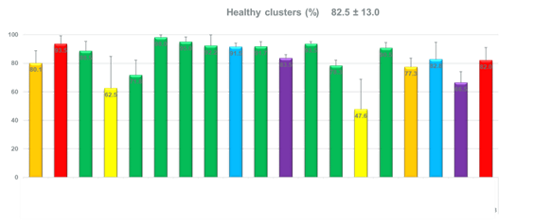
The scale of the problem can vary significantly between cultivars and seasons, ranging from vineyards without any symptoms to complete loss of the entire yield in extreme cases where mitigation strategies are not implemented. For example, in a survey conducted in 2023, the level of healthy clusters without sour rot, measured at particular dates, averaged 82%, ranging from nearly 100% to 47%.
What Increases the Risk of Cracking?
We know only some of the reasons for cracking in table grapes. Factors suspected to contribute to cracking include:
- Nutritional deficits during berry growth
- High humidity during ripening
- The use of pesticides that weaken the skin
- Diurnal fluctuations in berry volume
One obvious factor is the cultivar. Thin skin and firm fruit are considered important risk factors. After several years of research within the CrackSense project, researchers realised that, in a specific cultivar, a threshold of high firmness is itself a risk factor for cracking.
Firmness can be manipulated in part by lowering the amount of irrigation, especially during ripening. However, this action must be carefully adapted to the specific conditions of each vineyard to avoid reducing yield below the level of losses that could be caused by sour rot. When successfully applied, this mitigation strategy can reduce the high costs associated with sanitation and yield loss while also improving the postharvest quality of the berries.
Research Continues to Fill the Knowledge Gaps
Although significant progress has been made in understanding fruit cracking, many questions remain unanswered. Ongoing research within CrackSense continues to investigate the complex interactions between berry physiology, environmental conditions and vineyard management practices. By improving our understanding of when and why cracking occurs, researchers are helping growers adopt more targeted strategies to reduce losses, improve fruit quality and produce healthier table grapes for consumers.
Follow CrackSense on LinkedIn for the latest project updates and visit our Newsroom to discover more articles, insights, and research developments.