
The second episode of the CrackSense project’s Data Stories 360° podcast features Dr Helene Fotouo, a horticultural plant physiologist at The Leibniz Institute for Agricultural Engineering and Bioeconomy (ATB).
In this episode, Dr Fotouo discusses how plant sensor data can help researchers better understand how crops respond to their environment, with a particular focus on fruit cracking and the role of sensing technologies in precision horticulture.
Read the full conversation below to learn more about the science behind fruit cracking, the role of sensors in monitoring crops, and how these technologies can support growers in making better decisions.
Exploring Our Guest's Professional Journey
Could you briefly introduce yourself and your work at ATB? What led you to focus on horticulture and precision agriculture?
I am Dr. Helene Fotouo. I am a scientist at Leibniz Institute for Agricultural Engineering and Bioeconomy (ATB). I belong to the Precision Horticulture group under the Department of Agromechatronics. My work focuses on understanding how environmental factors and agronomic practices influence plant growth and plant quality. When I refer to plant quality here, I am talking about health, appearance and sensory properties, as well as nutritional value.
My main focus with the CrackSense project is to contribute to the integration of sensors, particularly moving from destructive methods to non-destructive methods of monitoring.
Understanding Fruit Cracking
Fruit cracking is a complex issue affecting crops such as table grapes, cherries, citrus and pomegranate. From a plant science perspective, what actually happens inside the fruit when cracking occurs?
Usually, cracking occurs when the internal pressure generated by fruit growth and water uptake exceeds the mechanical strength and elasticity of the fruit skin. So, what happens is that the skin and underlying cell layers fail to stretch sufficiently, and that leads to microscopic fractures and, in the long term, to visible cracks.
Many factors can contribute to cracking, including environmental conditions, irrigation, temperature fluctuations and fruit development stages. Which factors are the most critical, and why is predicting cracking so challenging?
The critical factors that contribute to cracking are rapid water uptake, high fruit temperature, humidity within the canopy, the developmental stage of the fruit, and the genetics of the plant. What makes cracking difficult to control or predict is that it is not caused by one factor alone. Rather, it results from the interaction of all these factors, as well as variations between orchards.
From Sensing Technologies to Practical Solutions
CrackSense combines different sensing technologies to better understand fruit cracking. What types of information can sensors provide that would be difficult or impossible to collect through traditional methods?
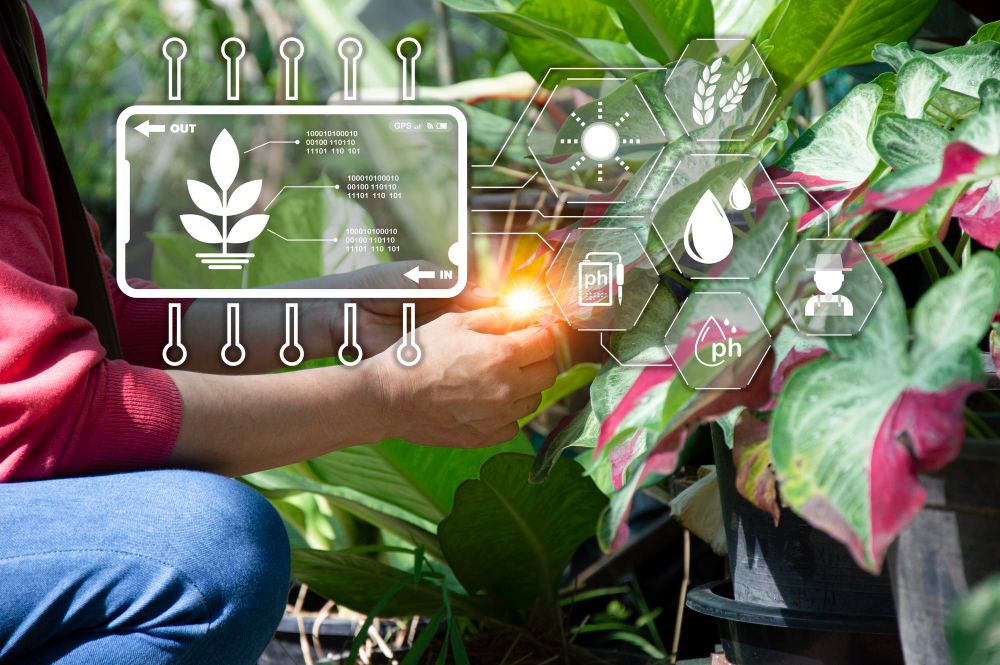
Sensors allow continuous, real-time and non-destructive measurement, which is difficult to achieve with manual measurements.
For example, LiDAR and 3D imaging help to monitor fruit growth dynamics. You cannot do that, for example, with a calliper because you cannot take that many measurements with a calliper. You have to move from one fruit to another, while with LiDAR and 3D imaging, you can scan several fruits at the same time.
Also, regarding fruit surface temperature, thermal cameras allow you to monitor several fruits at a time. With manual measurements, you have the same problem. Not only do you have to measure one fruit at a time, but you also only measure one spot on the fruit. With a thermal camera, you are able to take measurements for several fruits. As I mentioned, it is 3D, so you can see the whole surface of the fruit. You can have different points on the surface of the fruit, which gives you a better idea of the temperature.
In the case of cracking, if you take your measurements, it will be easy for you to identify areas that are prone to cracking based on the fruit temperature or also on the fruit growth rate.
How can these technologies help researchers move from simply observing cracking to predicting it?
Advanced technologies allow researchers to move from post-event analysis to early prediction. By continuously capturing physiological and environmental factors before cracking occurs, researchers are able to identify the causes of cracking before the actual event. With sensors, you are able to identify, or at least have a good idea of, when, where and why cracking occurs. This allows the development of better decision support.
One of the main goals of CrackSense is to support growers with practical solutions. How can better monitoring and prediction of cracking help farmers make decisions in the field?
The research will generate knowledge that will be passed on to farmers. Farmers will therefore be able to move from reactive management, which means acting only when cracking has already occurred or trying to prevent it when it is already occurring, to predictive management.
For example, they can identify risk periods by using sensors. If they identify a risk period, they can optimise irrigation. Let’s say they are monitoring fruit growth. If they see that the expansion is very fast, they can, for example, reduce the amount of water in the soil by reducing the speed of irrigation or the amount of water.
They can also improve harvest decisions. If, for example, you identify that when the fruit reaches a certain size it is more prone to cracking, then they can actually harvest earlier than the normal or conventional date.
They can also, based on the advice provided by researchers, better manage the canopy and the canopy microclimate. They can provide shading that will control the fruit temperature, or they can decide how to prune the tree, for example, to allow for airflow, which will then reduce humidity in the canopy.
The Future of Precision Horticulture
How do you see these technologies fitting into everyday farming practices? Do you think precision horticulture will become an essential part of fruit production in the coming years?
Yes, definitely. Precision agriculture will increasingly become integrated into everyday farming by providing growers with practical information for decision-making, particularly now that growers are faced with the challenges of climate change and water scarcity, as well as the demand for sustainable production.
Final Words
A sincere thank you to Dr. Helene Fotouo for sharing her expertise and giving us a closer look at the science behind fruit cracking and the role of sensing technologies in modern horticulture.
More Data Stories 360° episodes are coming soon. Follow CrackSense on YouTube and LinkedIn to stay updated and catch the next episode.