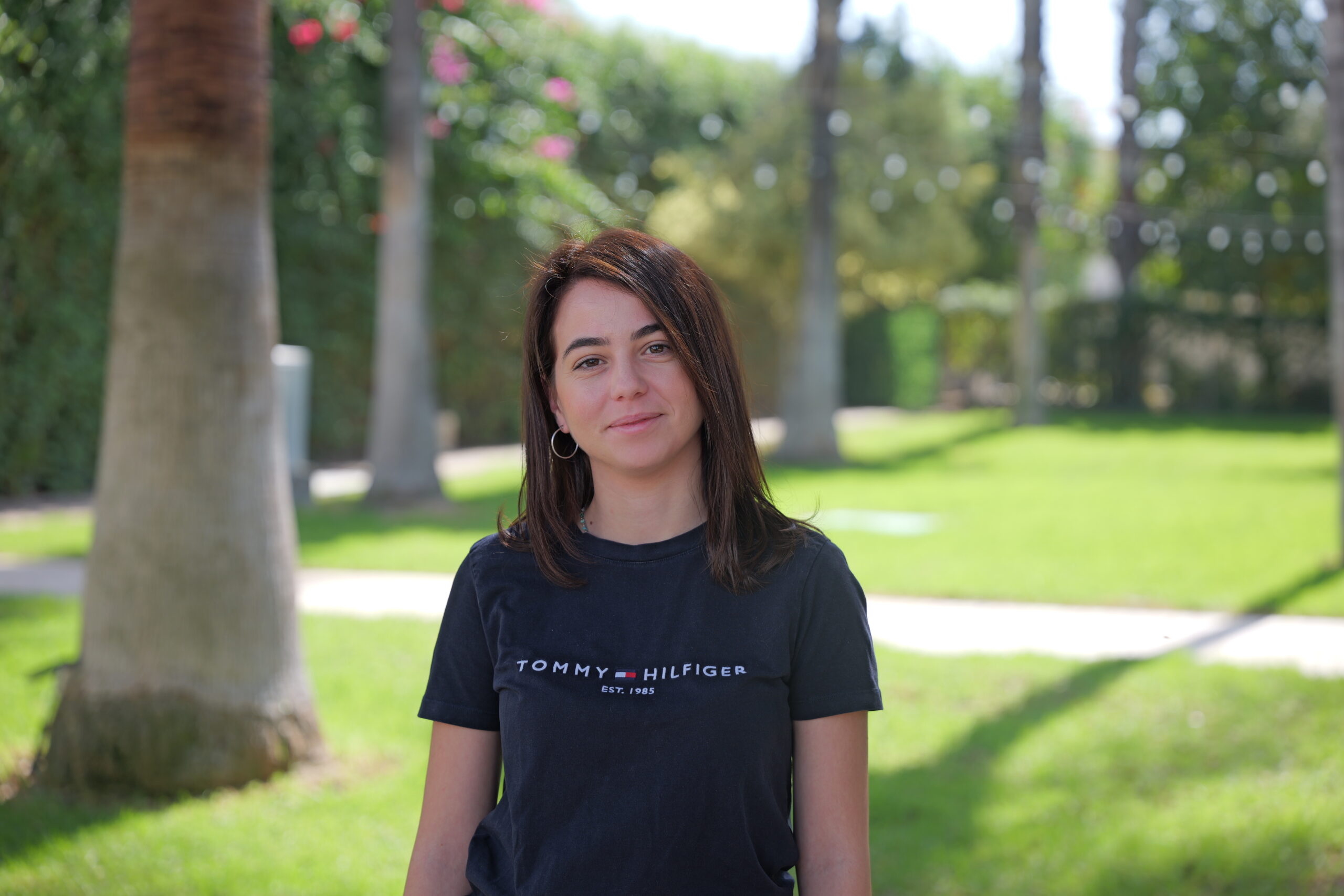
In this edition of Data Stories 360°, we speak with Georgia Nikolakopoulou, Associate Researcher and Project Manager at the Agricultural University of Athens and a member of the Smart Farming Technology Group.
The conversation explores Georgia’s journey in agricultural research and her work within CrackSense, with a particular focus on field data collection, fruit cracking and the role of growers’ knowledge in understanding crop responses.
Read the full conversation below to hear more about her experience and perspective on agricultural research and technology.
A Journey into Smart Farming
Could you tell us a little more about your own journey in agricultural research and what led you to specialise in new technologies for agriculture?
My name is Georgia Nikolakopoulou. I am an agronomist specialised in crop science and the application of new technologies in agriculture. I currently work as an Associate Researcher and Project Manager at the Agricultural University of Athens, within the Smart Farming Technology Group, under the supervision of Professor Spyros Fountas.
So, a few words about our university. The Agricultural University of Athens has a long tradition in agricultural research and education in Greece. Our group focuses on precision agriculture, smart farming technologies, remote sensing, proximal sensing, developing digital tools and decision support systems, among others.
Within CrackSense, I am mainly involved with the Greek pilots for pomegranate, table grapes and citrus experiments, and also in the development of the project’s Spatial Decision Support System and AI modelling. This means that my work combines field measurements, experimentation, data collection, communication with growers, and also the translation of research results into practical digital tools.
My journey started during my studies at the Faculty of Crop Science at the Agricultural University of Athens. At the beginning, my background was more connected to traditional agronomy, crop production and plant protection.
Then I had the opportunity to work in laboratories related to crop production and entomology, both at the Agricultural University of Athens and later at the Instituto Valenciano de Investigaciones Agrarias (IVIA) in Spain. Through this experience, I understood how important classical agronomic knowledge is, but at the same time, I also started to feel that agriculture cannot remain disconnected from new technologies.
Farmers today face many complex challenges, like climate change, water scarcity, labour shortages, increasing production costs and the need to produce high-quality food in a more sustainable way. So, traditional experience is extremely valuable, but on its own, it is no longer enough. We need tools that can help us observe, measure, predict and make better decisions.
My real interest in smart farming started during my master’s studies, when I joined Professor Fountas’s team. There, I was introduced to a wide range of technologies, such as drones, sensors, geospatial analysis and decision support systems.
What really fascinated me most was the connection between plant physiology and technology. For example, the idea that we can measure plant stress in the field, combine it with remote sensing data, and then use this information to predict risks such as fruit cracking was really exciting for me.
Field Research and Grower Knowledge
Your work in CrackSense involves both research and direct interaction with experimental orchards and growers. What does a typical visit to the field look like for you?
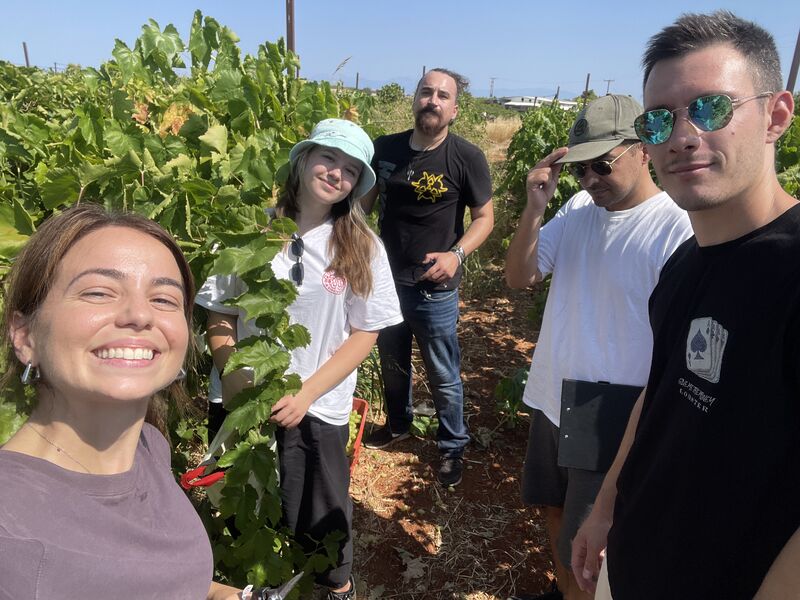
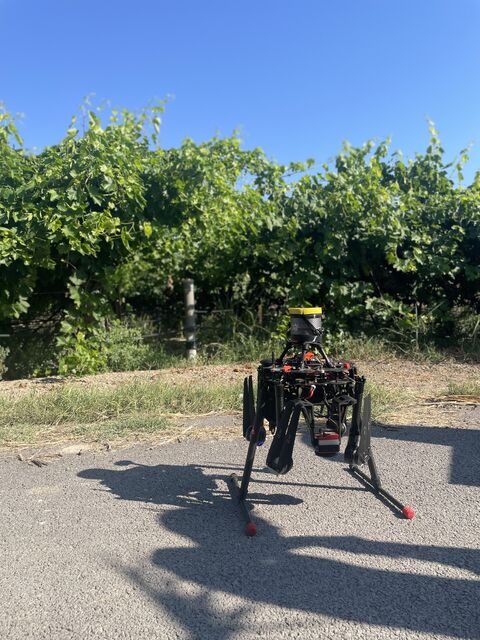
A typical field visit for CrackSense is very active and requires good organisation. In the Greek crop pilots, we collect different types of data at the same time. We usually work in sub-teams. One team is responsible for the UAV data collection. Depending on the campaigns, we usually collect data from multispectral, thermal and sometimes other types of imaging to collect information from above the field. For example, sometimes we also collect data from hyperspectral sensors.
There is also another team focused on proximal sensing and fruit-level measurements. This includes systems that can collect detailed information close to the fruit or the canopy, mainly using RGB sensors, thermal and 3D information.
And the third team collects physiological and omic measurements directly from the plants. This includes stem water potential, stomatal conductance, soil moisture, fruit weight, fruit diameter, trunk diameter, leaf temperature, and a lot of other measurements.
These parameters are strongly related to the plant water status, plant stress, growth dynamics and, eventually, the fruit cracking risk. But, the field visit is not only about collecting data. One of the most valuable parts is the interaction with the farmers during every campaign.
The grower knows the field better than anyone else, and he can usually tell us what happens in different parts of the plot, when the cracking trends start to appear, how irrigation affects the trees, or how the field behaved in previous years. This practical knowledge is extremely useful for interpreting our measurements.
At the same time, we share our observations with the farmer. For example, we may discuss plant water stress, irrigation practices or differences between treatments, and this exchange of knowledge is, for me, one of the most interesting parts of each field visit.
But, of course, fieldwork also has challenges. Most of our campaigns take place during summer, when the temperature in Greece can be very high. This means that we need to be efficient, well prepared and well coordinated.
We usually have a clear plan before going to the field because, once we go there, we need to collect many measurements in a limited time window, especially for the physiological measurements and the drone flights.
Understanding Fruit Cracking Through Data
After several seasons of working with fruit cracking data, have there been any findings or observations that particularly surprised you?
Several things have really surprised me. The first one is how complex fruit cracking really is. Before working closely on this topic, it is very easy to think that cracking is mainly caused by one factor, for example, too much water or rainfall. But after several seasons in the field, it becomes clear that cracking is a result of many interacting factors: water availability, irrigation timing, the fruit development stage, temperature, humidity, fruit growth rate, canopy conditions, cultivar characteristics…
Sometimes two fields may receive similar irrigation or experience similar weather conditions, but the cracking response can be totally different. This is how important it is to understand the phenomenon at different scales: at fruit scale, at tree scale, at orchard scale, and also, of course, at the regional scale.
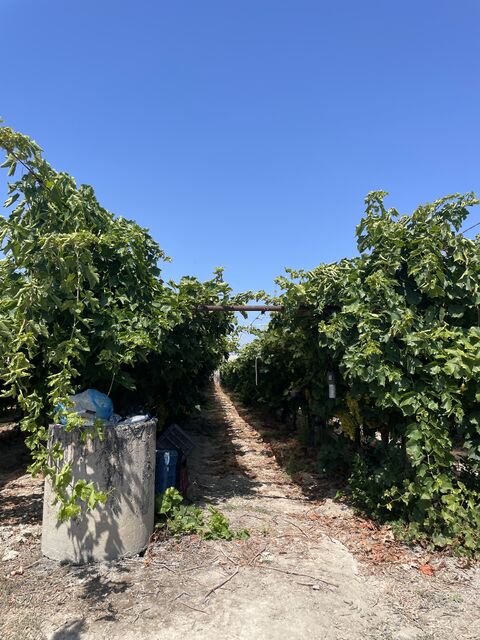
Another interesting observation is the role of extreme heat and dry conditions. For example, in the Greek table grapes, no fruit cracking was observed during the monitoring season. It was probably related to prolonged heat and dry conditions, which reduced the conditions that usually favour cracking.
At first, this may seem like a limitation because we could not model cracking directly for table grapes, but scientifically, it was still valuable because it helped us better understand plant stress, yield variability and also the importance of seasonal conditions.
On the other hand, in the pomegranate, the situation is totally different because cracking is a serious and recurring problem in the field. The interaction between irrigation management, fruit development and also plant water status became very important.
One of the most important lessons is that fruit cracking cannot be understood only by looking at the final harvest. We need to monitor what happened throughout the season, especially during the final critical phenological stages.
What surprised me most is the combination of field measurements and remote sensing, which can reveal patterns that are not always visible by eye. This is exactly where the new technologies become more useful, and they help us detect variability earlier and more objectively.
AI and Decision Support for Agriculture
CrackSense is also looking at AI and decision support tools. From your perspective as a researcher working directly with the data, what makes an AI-based tool genuinely useful for a farmer?
For me, an AI-based tool is useful for a farmer only if it is practical, understandable and connected to real decisions. It is not enough just to predict a model with good statistical performance. The farmer needs to understand what the result means and how it can help them decide what to do in the field.
A genuinely useful tool should give clear outputs. For example, instead of only showing complex model results, it should indicate whether the cracking risk is low, medium or high, where the risk is located in the field, and also which factors are contributing to that risk. It should also explain the level of confidence of the prediction, because farmers need to know how much they can trust the recommendation.
Another important point is the timing. A prediction is useful only if it comes early enough to allow action. If we predict cracking after the damage has already happened, then the tool has limited value. But if the system can support early warning before the critical periods, then it can help with irrigation planning, for example, fertilisation planning, monitoring or any other mitigation strategies.
The tool should also be very easy to use. Farmers and advisors or policymakers do not have time to interpret complicated dashboards. They need a platform that is simple, visual, directly connected to their crop and their field.
And this is why the design of the CrackSense Spatial Decision Support System is so important. We are not only developing models; we are trying to translate those models into a decision support environment that can actually be used by stakeholders.
Finally, the tool must be built on reliable data. This is one of the biggest challenges, not only for our project but generally when you are trying to develop such tools. AI depends on the quality of the data. The more representative the data sets are across years, countries, crops, cultivars and management conditions, the more useful and robust the final tools can become.
How has working directly with growers influenced the way you approach your research? Have there been situations where farmers’ needs or observations changed the way you looked at a research question?
Working directly with growers has strongly influenced the way we, as a group, approach the research. Farmers bring a level of practical knowledge that cannot be replaced by any sensor or any model. They observe their fields every day over many years, and they often know patterns that researchers may only detect after analysing several datasets.
A very good example comes from the pomegranate experimental fields in Greece. The farmers shared many years of observations about how different irrigation practices affect fruit cracking and the yield. This experience was very important for designing our experimental approach and helped us define irrigation treatments that were realistic and relevant to commercial practice, instead of just testing something that would be scientifically interesting but not useful for the growers.
Farmers also help us understand what kind of information is actually useful. As researchers, we may be interested in many variables, but growers usually ask very direct questions. For example: Is this field at risk? Where should I irrigate? Which part of the orchard should I check first? Can this help me reduce losses? These questions push us to make our research more focused and more applicable.
There have also been moments when farmers’ observations helped us interpret unexpected results. For example, when cracking was not observed in some seasons or fields, the local knowledge about weather conditions, the harvest timing, the irrigation history and the field behaviour helped us understand why.
I would say that working with farmers makes the research more grounded. It reminds us that the final objective is not only to develop models, but to provide information that can support real decisions in real agricultural conditions.
Looking at the progress made since you first became involved in CrackSense, what aspect of the project are you personally most interested in seeing develop further?
The part I am personally most interested in seeing develop further is the integration of the modelling and the Spatial Decision Support System.
We have already collected a large amount of data from different crops, different countries and experimental conditions, and now the exciting challenge is to transform these datasets into reliable predictive tools. For me, the most interesting direction is the expansion and recalibration of the models using more data from more years, more countries and more pedoclimatic conditions, because fruit cracking is strongly affected by local conditions.
A model developed in one orchard or one country may not always work perfectly somewhere else. The long-term goal should be to build models that are robust enough to support growers across different regions, ideally at the European scale.
I am also very interested in how we can combine different types of data more effectively. We have UAV and drone imagery, proximal sensing, weather data, physiological measurements, historical records and also farmer observations. Each data source tells only a part of the story. The real value comes when we integrate this into a system that can provide useful predictions at the tree or the regional levels.
Another important aspect is the user interface of the Spatial Decision Support System. Even the best model will have limited impact if the final platform is not understandable and usable. I am very interested in seeing how the platform evolves through feedback from farmers, advisors, researchers and policymakers.
In the long term, I hope that CrackSense can contribute not only to better prediction of fruit cracking, but also to more precise, sustainable and resilient crop management. If growers can identify risk earlier and manage their fields more efficiently, they can reduce yield losses, improve fruit quality, save resources and adapt better to climate variability.
CrackSense is a very good example of how agricultural research is changing. We are moving from simpler observation to integrated systems that combine field knowledge, sensing technologies, data science and decision support.
Closing Thoughts
Thank you to Georgia Nikolakopoulou for sharing her experience and perspectives on agricultural research, fieldwork and the use of digital technologies in crop management. The conversation highlights how combining field measurements, sensing technologies, data analysis and growers’ practical knowledge can provide a more complete understanding of complex challenges such as fruit cracking.
More Data Stories 360° episodes are coming soon. Follow CrackSense on YouTube and LinkedIn to stay up to date with the series and hear more conversations with researchers and experts working across agricultural research and technology.