
The CrackSense team has been active across many areas! New tech briefs, conference presentations, pilot findings, and fresh articles…
Here is a roundup of our latest work across the project.
Discover the CrackSense Tech Brief Series
How can technology help growers better understand and prevent fruit cracking? CrackSense has released a series of five tech briefs showcasing the innovative tools, sensing technologies, AI models, and decision-support systems developed and tested throughout the project.
From edge computing and robotic monitoring to predictive modelling and integrated decision-support solutions, the briefs provide a practical look at how advanced technologies can support smarter orchard management and reduce fruit cracking risks. Whether you are a grower, adviser, researcher, or technology developer, these concise publications offer valuable insights into the future of precision horticulture.
CrackSense Research Shared Through Publications and Conferences
CrackSense partners continue to disseminate project results through scientific publications and conferences.
Researchers from VizLore recently had a paper accepted for publication at the 49th MIPRO Convention: “Edge-driven Orchard Analytics: Automated Treetop Detection Using YOLOv11”. The paper presents advances in edge-based analytics and automated orchard monitoring, contributing to more efficient processing of agricultural data.
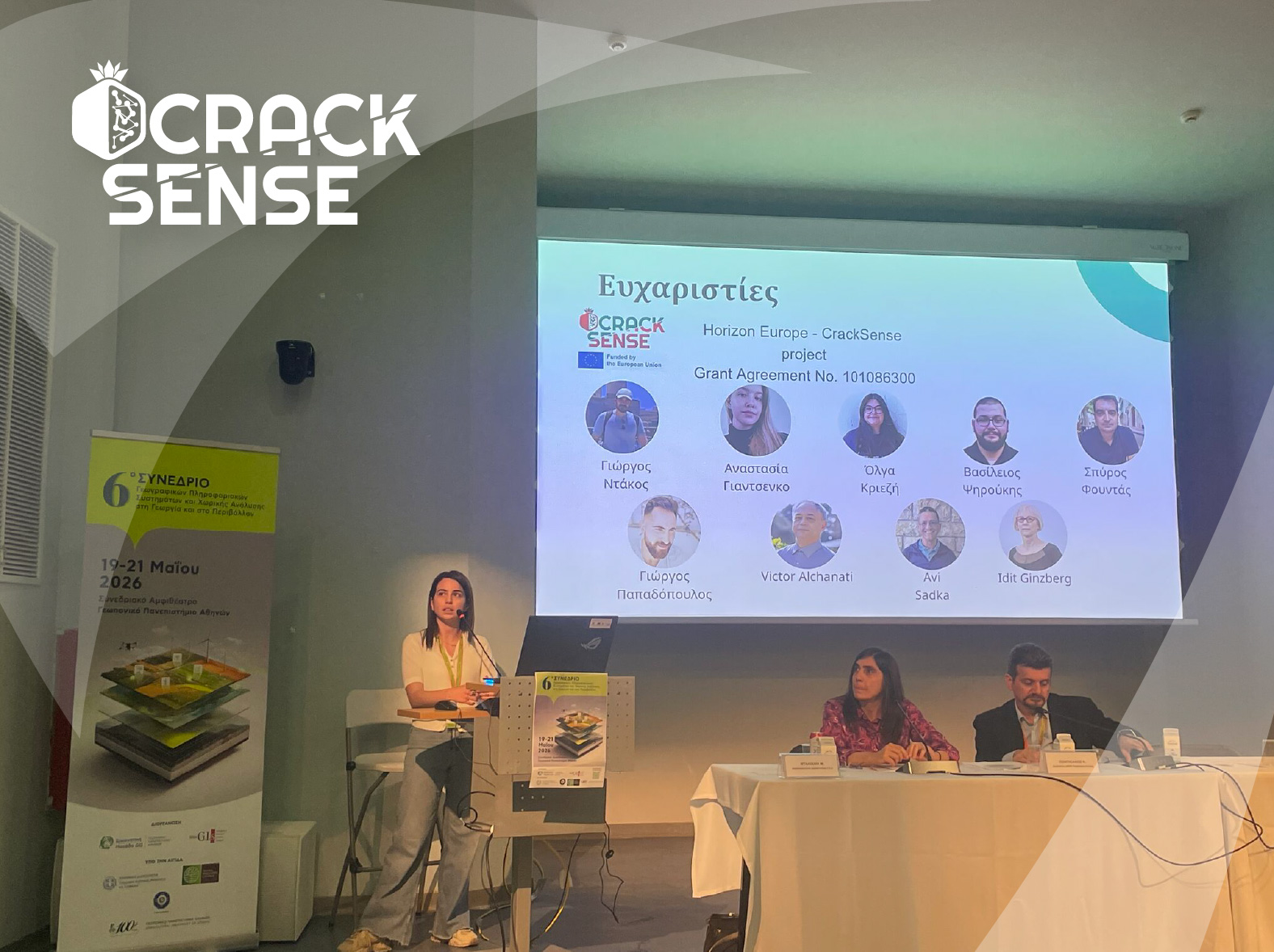
In addition, Georgia Nikolakopoulou from the Agricultural University of Athens presented CrackSense results at the 6th Conference on Geographic Information Systems and Spatial Analysis in Agriculture and the Environment. Her presentation highlighted findings from three years of experimental work in Greece, focusing on the assessment of pomegranate fruit cracking through close-range monitoring and aerial remote sensing within the CrackSense project.
CrackSense was also featured at the 3rd Annual Conference on “Plant Microbiomes”, held in Belgrade, Serbia. During the event, Future Systems Hub presented the abstract “Dissemination, Exploitation and Communication in Horizon Europe Projects – Examples of Good Practice”, highlighting the project’s communication, dissemination and stakeholder engagement activities. The presentation showcased effective approaches for maximizing the visibility and impact of Horizon Europe projects, with CrackSense serving as a case study.
CrackSense at the 93rd International Agricultural Fair

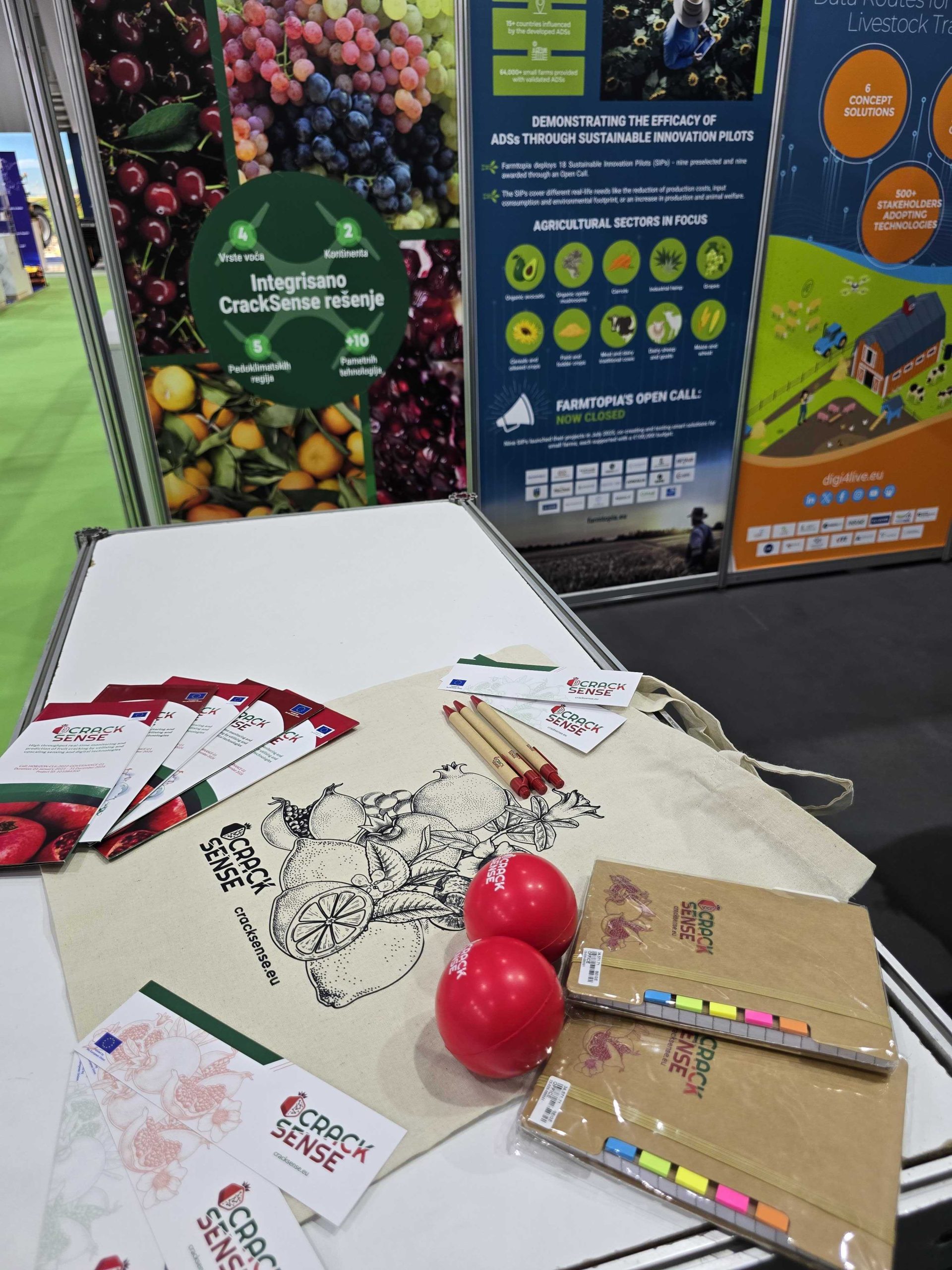
CrackSense was presented at the 93rd International Agricultural Fair in Novi Sad at the Future Systems Hub booth, where 18 EU-funded projects showcased innovative solutions for the future of agriculture and food systems.
The event was a great opportunity to engage with fruit growers, farmers, researchers, and other agricultural stakeholders. Discussions confirmed that fruit cracking remains a significant challenge across different fruit crops, while generating strong interest in the project’s sensor technologies, monitoring approaches, and predictive tools designed to support more effective orchard management.
In addition, CrackSense was also featured by Agro TV, helping further raise awareness of the project’s objectives and innovations among the wider agricultural community.
We would like to thank everyone who visited the Future Systems Hub booth, shared their experiences, and contributed valuable insights.
New Articles on Wikifarmer
As part of our outreach activities, two new articles were published on Wikifarmer. One explored the role of edge computing in agriculture, highlighting how real time data processing can support more efficient crop monitoring, faster decision making and improved farm management.
The second focused on the use of spatial decision support systems for predicting fruit cracking risk, demonstrating how environmental data, field observations and predictive analytics can help growers better understand and manage cracking in orchards and vineyards. Read the articles!
A Look at CrackSense Pilot Findings
Over the past months, we have been sharing insights from the experimental and pilot activities carried out across the CrackSense project. This period was dedicated to updates from grape and pomegranate pilots, presenting the approaches tested in the field, the main findings, and their potential broader impact.
Citrus pilot results are next, so stay tuned for further updates! As the project moves into its 2026 activities, partners will continue collecting data, refining models, and validating solutions under real growing conditions.
Engaging Audiences Through Interactive Content on Citrus

Following our pilot findings campaign, we also ran a dedicated social media series on citrus crops designed to engage audiences and raise awareness of the challenges associated with fruit cracking. The campaign combined educational and interactive content, including fun facts about citrus, audience polls, and visual materials illustrating fruit development and the factors that influence fruit cracking.