
As we enter the third year of the CrackSense project, it is a great moment to reflect on the progress we have made and plan the next steps. This year, we are preparing a variety of activities to continue advancing our work on addressing fruit cracking.
Take a look at how we started this year with important conferences, interviews, and other milestones, laying the foundation for the next phase of our efforts.
CrackSense Consortium Meeting in Athens: Paving the Way for Pilots
The second CrackSense Consortium meeting took place at the Agricultural University of Athens, bringing together project partners to discuss progress, refine strategies, and plan for the next steps in mitigating fruit cracking.
Over three days, consortium partners collaborated on data integration and pilot site advancements, and a workshop was held on upgrading the database to a repository, laying the groundwork for the Decision Support System. The final day of the meeting took the discussions from the conference room to the field.
Partners visited an experimental field in Kiato to explore crop labeling and data collection with the Tommy system, discuss climate challenges, and strengthen research-industry connections through a visit to Lafazanis Winery, highlighting the fusion of traditional and modern agricultural practices.
The meeting not only strengthened the scientific foundation of the project but also reinforced the importance of cross-border cooperation in addressing agricultural challenges.

Spotlight on: Celebrating the Fruit of the Year 2024
CrackSense started the year with an insightful interview featuring Dr. Idit Ginzberg, exploring the cultural, scientific, and agricultural significance of pomegranates, the Fruit of the Year 2024. She shares her journey in uncovering the mysteries of fruit cracking, highlighting key challenges, breakthroughs, and innovative research shaping the future of pomegranate cultivation.

CrackSense Project: Key Presentations at International Conferences
The CrackSense project has been actively showcased at several events, highlighting its ongoing efforts to address the challenges of fruit cracking in agriculture.
1. At the First Symposium of the Israel Fruit Tree Society, held at the Volcani Institute in Rishon Le Zion, Moshe Dubinin from Ben-Gurion University of the Negev and Michael Morozov from Volcani Institute discussed the critical challenges of fruit cracking and CrackSense’s innovative solutions. The event provided an excellent platform for collaboration among scientists, farmers, and industry professionals.
2. The CrackSense consortium also participated in the Science Symposium at Fruit Logistica in Berlin. With around 150 participants and 16 international presentations, the event sparked engaging discussions on agriculture. Avi Sadka from the Volcani Institute, along with partners Manuela Zude-Sasse and Nicolas Tapia Zapata from Leibniz Institute for Agricultural Engineering and Bioeconomy (ATB), presented key research findings from the project.

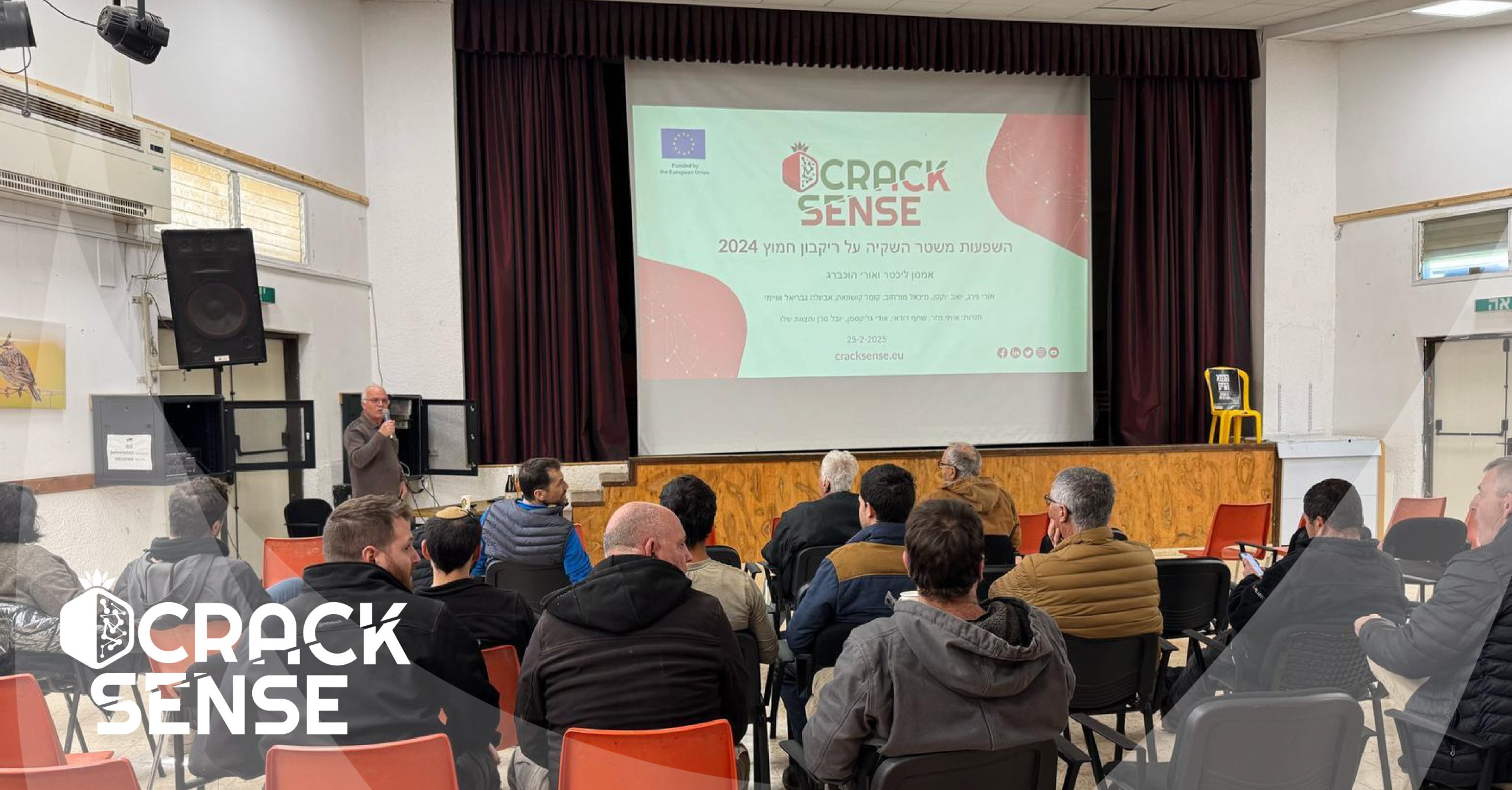
3. On February 25th, growers of the Tali Grapes cooperative gathered to hear the annual updates on the research done in their vineyards. Dr. Amnon Lichter, a member of the CrackSense consortium from the Volcani Institute, was the main speaker. He shared the recent history of grape cracking in the Lachish region – Israel’s primary area for fresh grape production. He highlighted the scale of the issue in 2023 and 2024 and explained how irrigation management can help reduce losses.
These events have underscored CrackSense’s role in bridging research with real-world agricultural challenges, fostering international collaboration for sustainable farming solutions.
Explore the News and Blog Posts in CrackSense Newsroom
Infographics have a unique way of transforming complex projects into visually engaging stories. They allow us to digest data, methodologies, and key takeaways at a glance, bridging the gap between intricate research and clear communication. The infographic here does exactly that, offering a window into the CrackSense project.
