
The third episode of the CrackSense project’s Data Stories 360° podcast features Nikos Arvanitis, a Machine Learning Engineer at Synelixis S.A.
In this episode, Nikos discusses how artificial intelligence and data-driven technologies are being applied in agriculture, with a particular focus on machine learning, crop monitoring, pest and disease detection, and smart irrigation. He also shares insights from his work on the AgriDataValue project, a sister project of CrackSense, and explores the synergies between the two projects.
Read the full conversation below to learn more about the opportunities and challenges of using AI in agriculture, the value of combining data from different sources, and how projects such as AgriDataValue and CrackSense can contribute to practical solutions for farmers.
Exploring Our Guest's Professional Journey
Could you introduce yourself and tell us what attracted you to applying machine learning in agriculture?
My name is Nicholas Arvanitis, and I work as an ML Engineer in the field of AI for sustainable agriculture.
What attracted me to this area is the profound, real-world impact it can have. Agriculture is at the heart of some of our most critical global challenges, such as food security, climate change and resource scarcity.
So, machine learning can offer powerful tools to not only understand these complex systems, but also actively improve them. The opportunity to move from reactive farming to a proactive, data-driven approach that can optimise yields, reduce irrigation water waste and protect the environment is what really motivates me.
What is your role in the AgriDataValue project, and how does your work contribute to developing data-driven solutions for agriculture?
My role in AgriDataValue is the role of a data scientist and machine learning engineer. Together with my colleagues, I’m responsible for the development of machine learning models that power our data-driven agricultural solutions.
In practical terms, my work involves different key areas, such as the development of a data pipeline, which is the infrastructure to ingest, clean and harmonise data from diverse sources, such as satellite imagery or drone imagery, IoT sensors and weather stations.
Also, another key area, and the most important, is model development and validation. I develop and fine-tune machine learning models for specific agricultural use cases, such as pest and disease recognition, yield prediction, irrigation optimisation.
And another important thing is that I have to collaborate with and work closely with agronomists and domain experts to ensure that the developed ML models are working as expected. I have to translate the domain knowledge into specific model requirements and help design intuitive interfaces that include these ML models, so that farmers can easily interact with them.
AI Applications in Agriculture
Artificial intelligence is becoming increasingly important in farming. From your perspective, what are some of the biggest opportunities AI offers to farmers today?
I think the biggest opportunities lie in moving from generalised to personalised precision management.
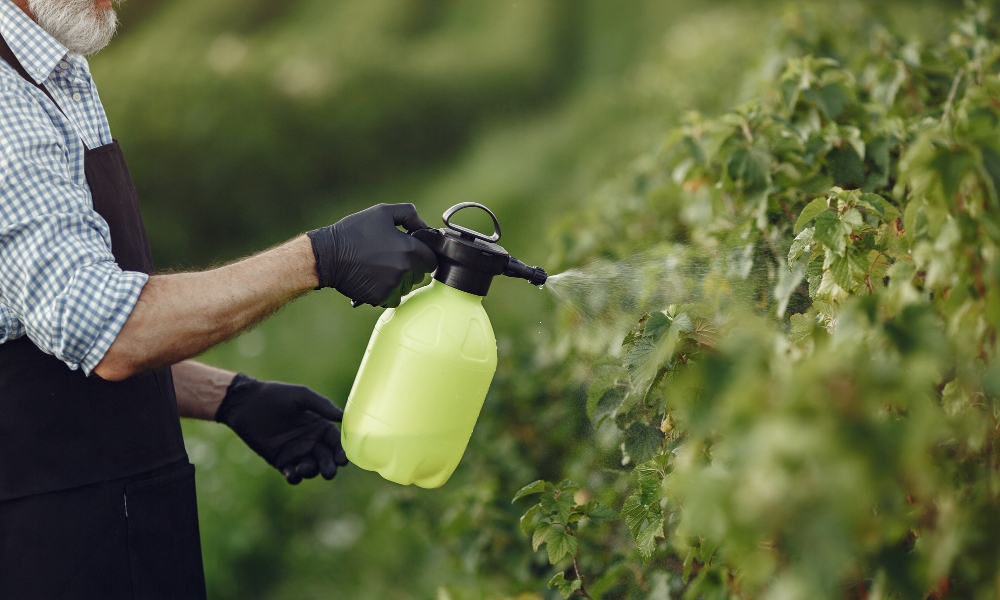
AI enables farmers to analyse vast amounts of data to make better decisions. So, this whole process may include precision resource management, applying water, fertilisers and pesticides only where and when they are needed.
For example, AI-enabled precision spraying may reduce pesticide usage by up to 30% without compromising the yields.
Also, predictive analytics. We could utilise AI models to forecast weather patterns, drought risks and pest outbreaks.
And another thing is autonomous decision-making, moving from simple automation to intelligent, self-optimising systems that can handle complex tasks, from planning to harvest.
A significant part of your work focuses on pest and disease recognition. How can machine learning help detect these problems earlier, and why is early detection so important for crop production?
Machine learning, particularly deep learning, including computer vision, can totally change the way pest and disease is detected and recognised.
For example, we could train machine learning and deep learning models using vast amounts of images of diseased and also healthy plants to drive these models to be able to distinguish between healthy and diseased plants.
Also, UAVs, drones, may be used, drones equipped with multispectral or hyperspectral cameras, to continuously monitor fields and provide warnings for possible pest presence several days in advance.
And this early-stage detection is critical because pest infestation may cause up to 40% yield losses annually. So, detecting such a problem at its early stage means that the farmer can intervene with a smaller and more targeted treatment, which is not only more effective but also uses fewer chemicals and saves money for the farmer.
You have also worked on smart irrigation solutions. How can data and AI help farmers use water more efficiently while maintaining healthy crops?
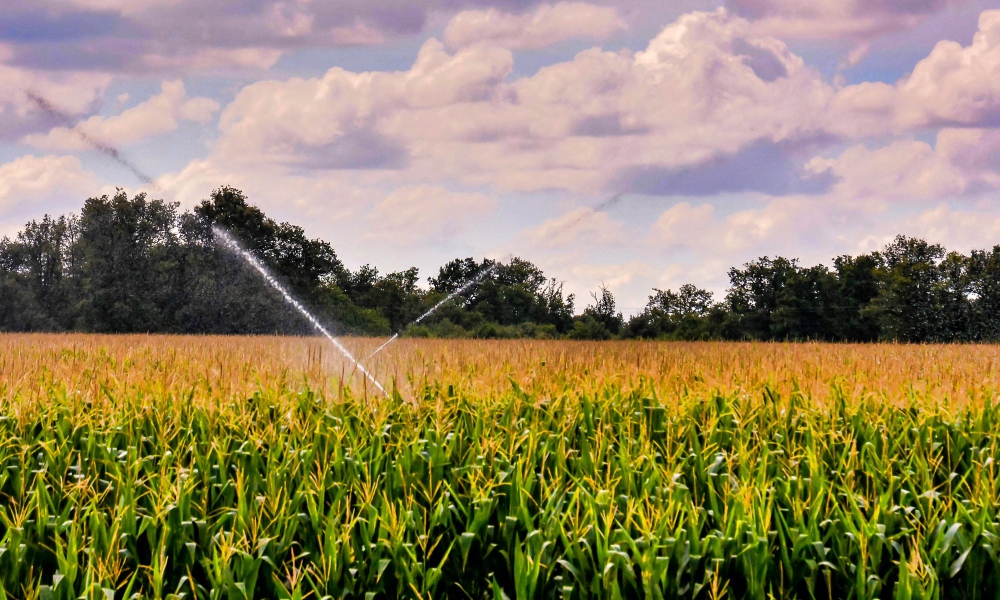
Smart irrigation leverages a network of sensors, for example, sensors for measuring soil moisture, soil temperature, air temperature, humidity and solar radiation, along with weather data, to create a real-time picture of the crops’ water needs.
AI algorithms are able to analyse these data patterns to create precise and adaptive watering schedules. So, instead of watering on a fixed timer, the system can predict exactly how much water each part of the field needs at a given time, given the measurements of the IoT sensors.
This whole approach can improve water usage efficiency by 30 or 50%. This can ensure that crops get the optimal amount of water for healthy growth, avoiding both water stress from underwatering and also root diseases from overwatering, which may cause increased soil moisture that attracts pests, for example.
While also significantly conserving one of our most precious resources: water.
Working Across Projects
AgriDataValue aims to make better use of agricultural data. How does bringing together data from different sources improve decision-making on the farm?
The true power of AI in agriculture emerges when we stop looking at data in silos and start using it. Integrating data from different sources, such as satellite imagery, drone imagery, IoT soil and weather sensors, and weather stations, we are able to create a holistic and high-resolution view of a field.
For example, we might have satellite data showing us a stressed area of a field. But only if we combine it with a soil sensor would we be able to determine if this stressed area is due to lack of water, due to nutrient deficiency or a pest presence.
This multisource data integration allows decision support systems to learn complex spatial and temporal patterns, leading to more accurate and actionable insights.
Many farmers are interested in digital technologies but may wonder how practical they are to implement. What do you see as the main challenges and opportunities for adopting AI-powered tools in everyday farming?
One challenge is regarding the infrastructure. Many rural areas still have limited digital connectivity, and there is a difficulty for the farmers to have good internet access. Also, there is the cost of the equipment to be installed and the possible uncertainty from the farmer’s side about the return of their investment.
Another challenge is the trust, the lack of trust that farmers may have. They may see AI as something promising but still unproven. So, they may want to have stronger evidence of the real-world performance before adopting it.
How do you see AI and data-driven technologies shaping the future of agriculture over the next decade, and what impact do you hope projects like AgriDataValue and CrackSense will have?
I think over the next decade we will see a shift towards the development of fully autonomous cognitive agricultural ecosystems.
What does this mean? This means AI systems that do not just analyse data, but they also act on it. Multi-agent systems that would be able to manage everything from planting to harvesting with minimal but essential human intervention. I think we will see more advanced multi-agent systems that could handle a multitude of tasks, with a greater focus on agentic AI that can make coordinated and goal-directed decisions.
As for the second part of your question, regarding projects such as AgriDataValue and CrackSense, my hope is that they will be something like a bridge between cutting-edge research and practical impact.
So, by funding collaborative research and innovation actions such as these projects, it could be crucial for validating these technologies in real-world conditions, demonstrating the benefits of them, like reduced pesticide usage and water saving.
Also, for building trust by providing strong evidence for the farmers and also fostering the collaboration between researchers, technology developers and farmers to ensure the developed solutions are actually useful and accessible.
Closing Thoughts
A big thank you to Nikos Arvanitis for helping us better understand how artificial intelligence and machine learning are being applied to agriculture, from improving crop monitoring to making better use of agricultural data. His insights have shown how research is helping to develop practical tools for farmers.
More Data Stories 360° episodes are coming soon. Follow CrackSense on YouTube and LinkedIn to stay updated and catch the next episode.