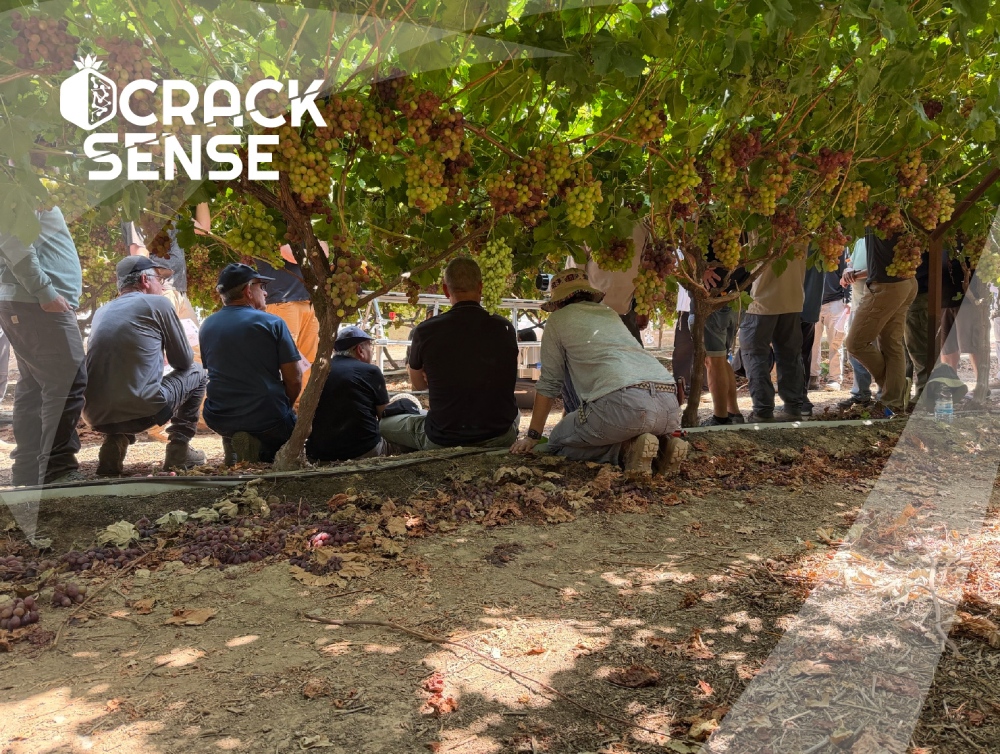
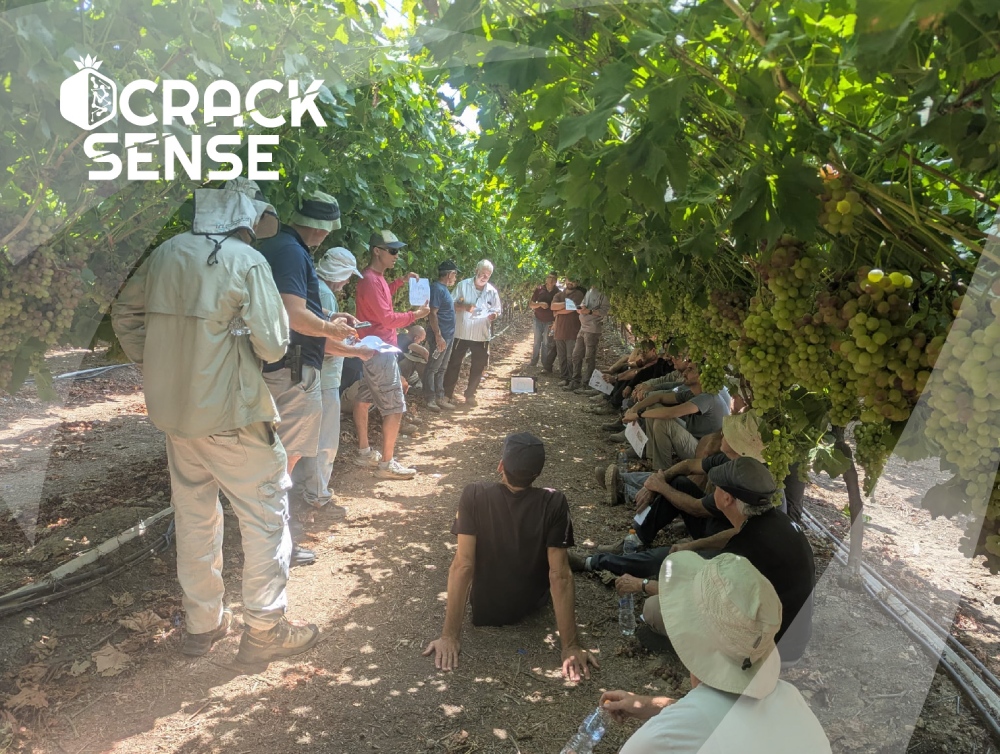
How can vineyard technologies and water management help researchers better understand grape cracking? This was one of the questions explored during the CrackSense Open Day, held at a vineyard in Lachish village, Israel.
The event brought together researchers, growers and technology specialists to discuss grape cracking, demonstrate digital tools and examine approaches for monitoring and reducing cracking in vineyards.
Exploring Grape Cracking in the Vineyard
Why do some grape varieties remain firm and intact while others become more susceptible to cracking?
This question was at the heart of the CrackSense Open Day organised by Volcani Institute, leading organisation of the CrackSense project, which focused on the factors that influence cracking and the approaches being investigated through the project.
The programme combined presentations, technology demonstrations and discussion directly in the vineyard. This allowed participants to connect project research with the conditions encountered during grape production.
From Digital Technologies to Field Data
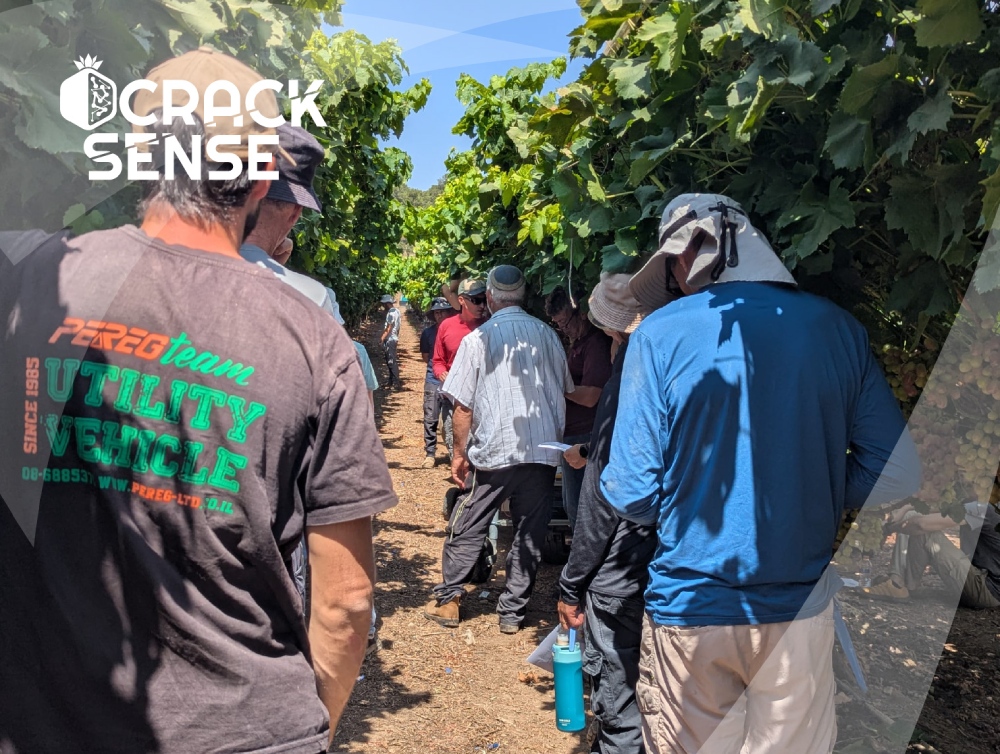
The CrackSense Open Day included demonstrations of several digital technologies being used within the project to collect information from vineyards.
Participants saw a drone flight over the vineyard, demonstrating how aerial data can support the monitoring of vineyard conditions and crop development.
The programme also featured Tommy, a proximal sensing technology used for data acquisition in the vineyard. By collecting information close to the plants, such systems can provide detailed observations that complement aerial measurements.
Another demonstration focused on technologies for monitoring the water status of the vine. Florapulse was presented as part of the work investigating the relationship between vine water status and grape cracking.
Together, these demonstrations showed how different sources of field data can contribute to a more detailed understanding of the conditions associated with cracking.
Understanding the Causes of Cracking
The CrackSense Open Day moved beyond technology demonstrations to examine the biological and environmental factors associated with grape cracking.
Presentations addressed the concept of cracking mitigation in grapes, including the potential role of irrigation management and changes in berry size throughout the season.
Berry growth can change considerably over time. Understanding these fluctuations can help researchers examine when fruit may become more susceptible to cracking and how vineyard management could influence this risk.
Furthermore, the project team discussed deficit irrigation as one approach being investigated for mitigating cracking. The aim is to better understand how controlled water management may influence fruit development and the conditions associated with cracking.
Seeing the Research in Practice
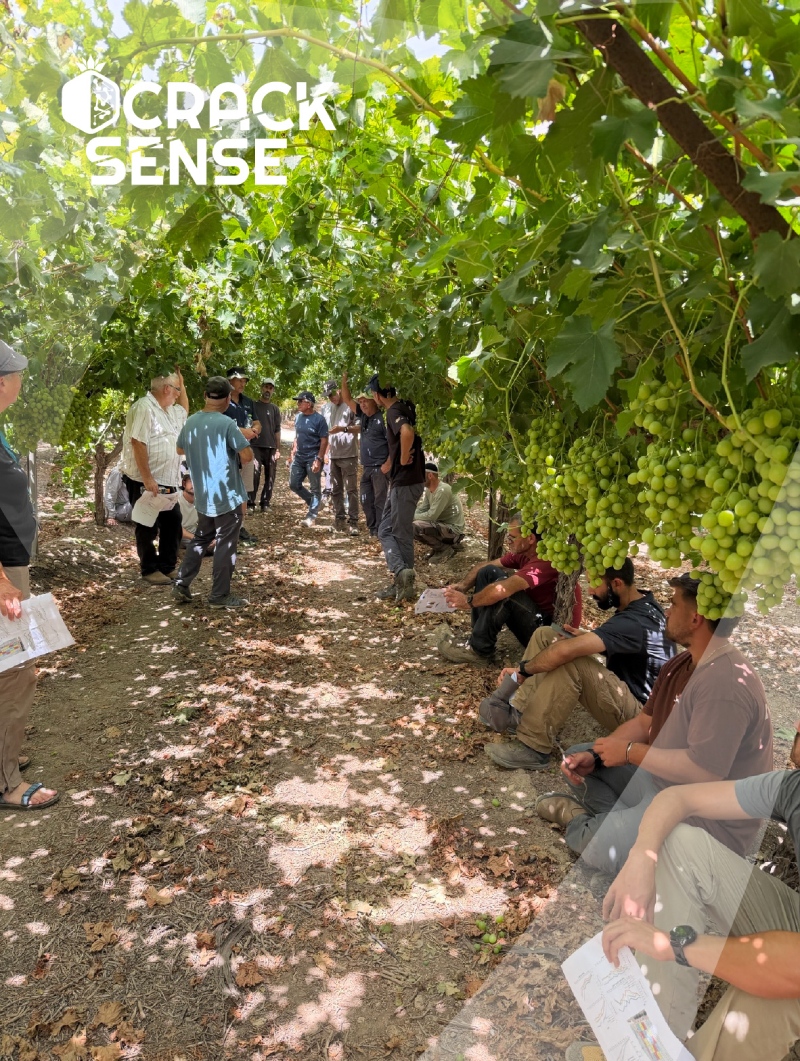
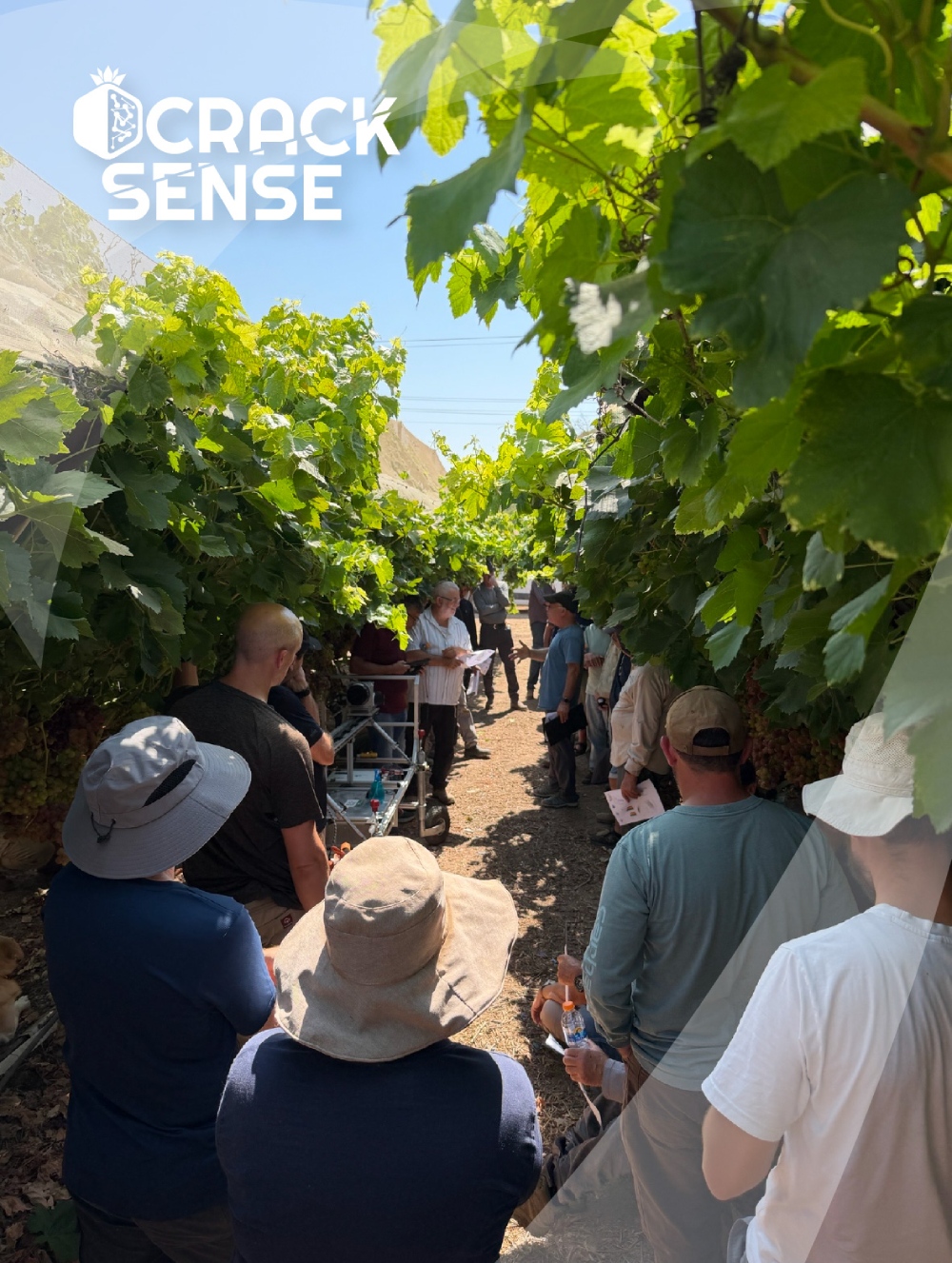
One of the most useful aspects of the CrackSense Open Day was the opportunity to see the research activities directly in the vineyard rather than only through presentations.
The demonstrations showed how data can be collected in the field and how different technologies can contribute to monitoring vineyard conditions.
The programme also included a visit to an Autumn Crisp vineyard. This variety was presented for its high firmness and low susceptibility to cracking, providing a practical example for discussing the characteristics that may influence fruit resilience.
These types of events also provide an opportunity to discuss what growers need, which questions remain open and how research results can become more useful for vineyard management. Alongside the live demonstrations, CrackSense materials were available to provide further information about the project and its work on fruit cracking.
Continuing the CrackSense Work
The CrackSense Open Day is part of the wider CrackSense effort to better understand and address fruit cracking through data, field observations and digital technologies. For the CrackSense team, direct engagement with vineyard stakeholders remains an important part of connecting research with practical needs.
Follow CrackSense on LinkedIn for updates from the project, field activities and upcoming events.
For more stories, project results and activities, visit the CrackSense Newsroom and continue following the work on fruit cracking across Europe and beyond.