
As CrackSense approaches the end of its third year, we are entering an important phase of the project. The period ahead will be dedicated to reviewing our progress, consolidating our results, and setting the direction for the final year. In this newsletter, we provide an overview of recent activities and outline what lies ahead as we move towards the project’s concluding stages.
Advancing Towards the CrackSense SDSS Platform
CrackSense has now completed its data-gathering and experimental phases. The focus has shifted to analysing the results and developing the first version of the Spatial Decision Support System (SDSS). This platform is designed to support real-time monitoring and prediction of fruit cracking risk in high-value crops, including table grapes, citrus, pomegranates, and sweet cherries.
1st CrackSense SDSS Workshop
The aim of this workshop was to co-design the initial working version of the CrackSense platform with real end users. Through this collaborative process, participants contributed to:
- validating and refining the mock-ups before development begins
- ensuring the planned functionalities correspond with user needs and expectations
- identifying elements that may require adjustment or further development
This interaction helps us ensure that the platform is not only technically sound, but also genuinely practical for those who will use it.
Next Steps: Consortium Meeting in Novi Sad
Work on the SDSS will continue throughout the coming months, leading into our next consortium meeting in Novi Sad in February 2026. During this gathering, partners will review recent progress, outline the activities planned for the year ahead, and refine the research agenda for 2026. The meeting will also provide space to revisit pilot developments and agree on action plans for the project’s final phase. Alongside these discussions, the programme will include panel sessions and a field visit connected to ongoing CrackSense activities.
CrackSense Open Days: Highlights from This Year’s Activities
This year, the CrackSense project organised seven Open Days across partner regions, offering growers, researchers, and stakeholders the opportunity to observe our experimental work and monitoring approaches first-hand. The final three events took place in Israel and Greece.
Held on 22 October at Kibbutz Tsor’a, the event introduced participants to the experimental setup used to study fruit cracking in pomegranates. Attendees were able to see how remote and proximal sensing tools support the monitoring of fruit properties and learned how predictive models contribute to estimating yield and cracking risks, enriched by the grower’s perspective from the field.


The Open Day in Greece took place on 29 October at the CrackSense experimental field in Argoliko. Attendees observed the use of innovative sensing techniques to address fruit cracking, including a guided tour through the orchard and a demonstration of multispectral and thermal drone-based monitoring. The team completed an aerial survey of the orchard to illustrate how aerial data support predictive modelling. Proximal measurement tools were also presented as part of the monitoring workflow.
The final Open Day of the year was held on 2 December in Kfar Habad. Participants observed how remote and proximal sensing methods are applied in citrus orchards, including UAV flights, stomatal conductance and LAI measurements, fruit and soil sensor demonstrations, and the TOMMY system. Experts outlined approaches for monitoring crop status, improving yield, and assessing cracking risks, with growers contributing their practical insights.

CrackSense in 2025: Events and Highlights
Beside Open Days held this year, CrackSense was also represented at a range of scientific and industry events, helping connect the project with researchers, growers, and stakeholders across Europe.
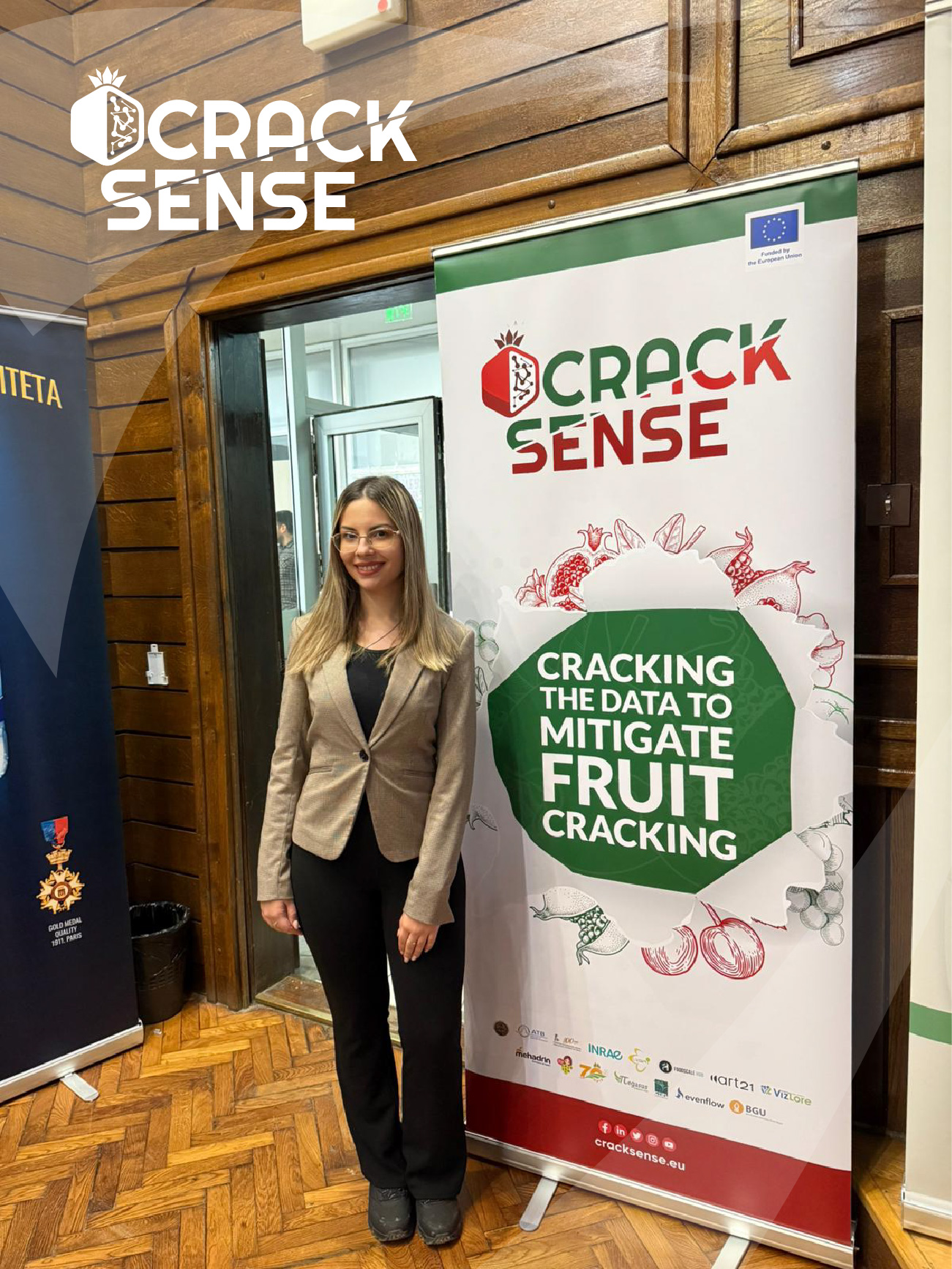
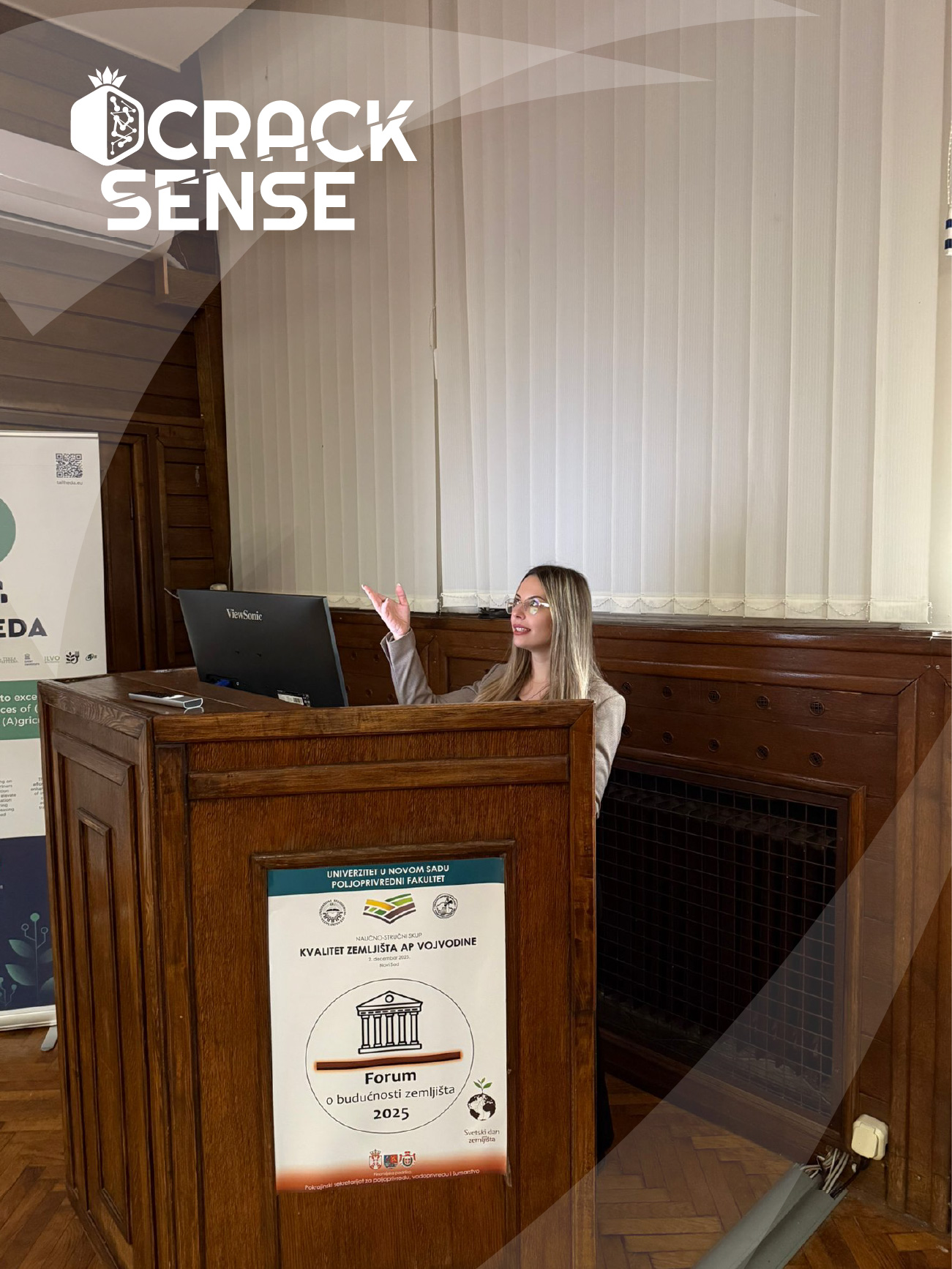
The most recent activity was the Soil Quality Forum at the Faculty of Agriculture in Novi Sad, where CrackSense was presented as part of discussions on soil management and its role in reducing fruit cracking.
Earlier this year, the project was showcased at Job Fair and the Agricultural Fair, both held in Novi Sad, and featured at key conferences, including Fruit Logistica, the First Symposium of the Israel Fruit Tree Society, the 15th European Conference on Precision Agriculture (ECPA 2025), the 10th International Cherry Symposium, and the VI International Symposium on Pomegranate and Minor Mediterranean Fruits.
Looking ahead, CrackSense will be presented at “Christmas Research Innovation Green Street” on 22 December at the Faculty of Agriculture in Novi Sad.
Spotlight On: Insights from the Field and Research
This year, our Spotlight series featured four episodes highlighting the people behind the CrackSense project and their perspectives on fruit cracking.
- It began with a focus on project coordinators Avi Sadka and Victor Alchanatis from the Volcani Institute, who shared their experiences, key experimental outcomes, and expected results for the next project phase.
- Two episodes focused on Pegasus Agrifood Coop, with insights from President Marcos Legas and Agronomist Thanos Dritsopoulos on producing high-quality table grapes that meet consumer expectations while tackling challenges such as fruit cracking, climate change, and water scarcity.
- The fourth episode featured Georgia Nikolakopoulou from the Agricultural University of Athens, who discussed the Smart Farming Technology Group’s work and the university’s role in CrackSense, including the development of a Spatial Decision Support System for advisors, farmers, and policymakers.
New Collaboration with Wikifarmer
CrackSense has signed a Memorandum of Understanding (MoU) with Wikifarmer to strengthen collaboration on knowledge exchange, sharing best practices, and jointly organising future events. This partnership aims to enhance the capacity of both parties to support growers and the wider agricultural community. As part of this collaboration, one article has already been published, with a second expected soon, highlighting shared insights and project outcomes.